Same-Day Free Estimates with 30-Minute Arrival Windows for Collin and Dallas County areas Since 1977.
Garage Door Insulation: Does It Actually Matter in Texas?
The common assumption about garage door insulation in Texas is that it doesn't matter much — after all, if the goal is to keep heat out, and Texas summers put heat everywhere, what difference does a layer of foam make? It's a reasonable question, and the answer is more useful than a simple yes or no.
Insulation does matter in Texas, but the reasons are different from what you might expect in a northern climate. This is what DFW homeowners actually gain from an insulated door and when it genuinely isn't worth the investment.
What Garage Door Insulation Actually Does
Garage door insulation is measured by its R-value — the higher the number, the more resistance to heat transfer. A single-layer steel door (the most common type in older DFW homes) has an R-value of essentially zero. A two-layer steel door with polystyrene foam backing typically reaches R-6 to R-9. A three-layer door with polyurethane foam injected between two steel skins can reach R-12 to R-18.
In a cold climate, R-value is about keeping heat inside the living space. In Texas, the same physics works in reverse — a door with better insulation slows the rate at which outdoor heat penetrates into the garage. Whether that matters depends on what is on the other side of your garage wall.
When Insulation Makes a Real Difference in DFW
Attached Garages Sharing a Wall with Living Space
If your garage shares a wall with a bedroom, kitchen, or living room — which describes the majority of Coppell, Murphy, and Dallas-area homes built in the last 40 years — the temperature inside the garage directly affects the energy load on your home's HVAC system. An uninsulated garage in a DFW summer can reach 130°F or higher. The wall between that space and a conditioned room is working against your air conditioning constantly. An insulated garage door reduces the peak temperature inside the garage by 20 to 30 degrees, which meaningfully reduces the load on the shared wall and the HVAC system behind it.
Opener Motor Longevity
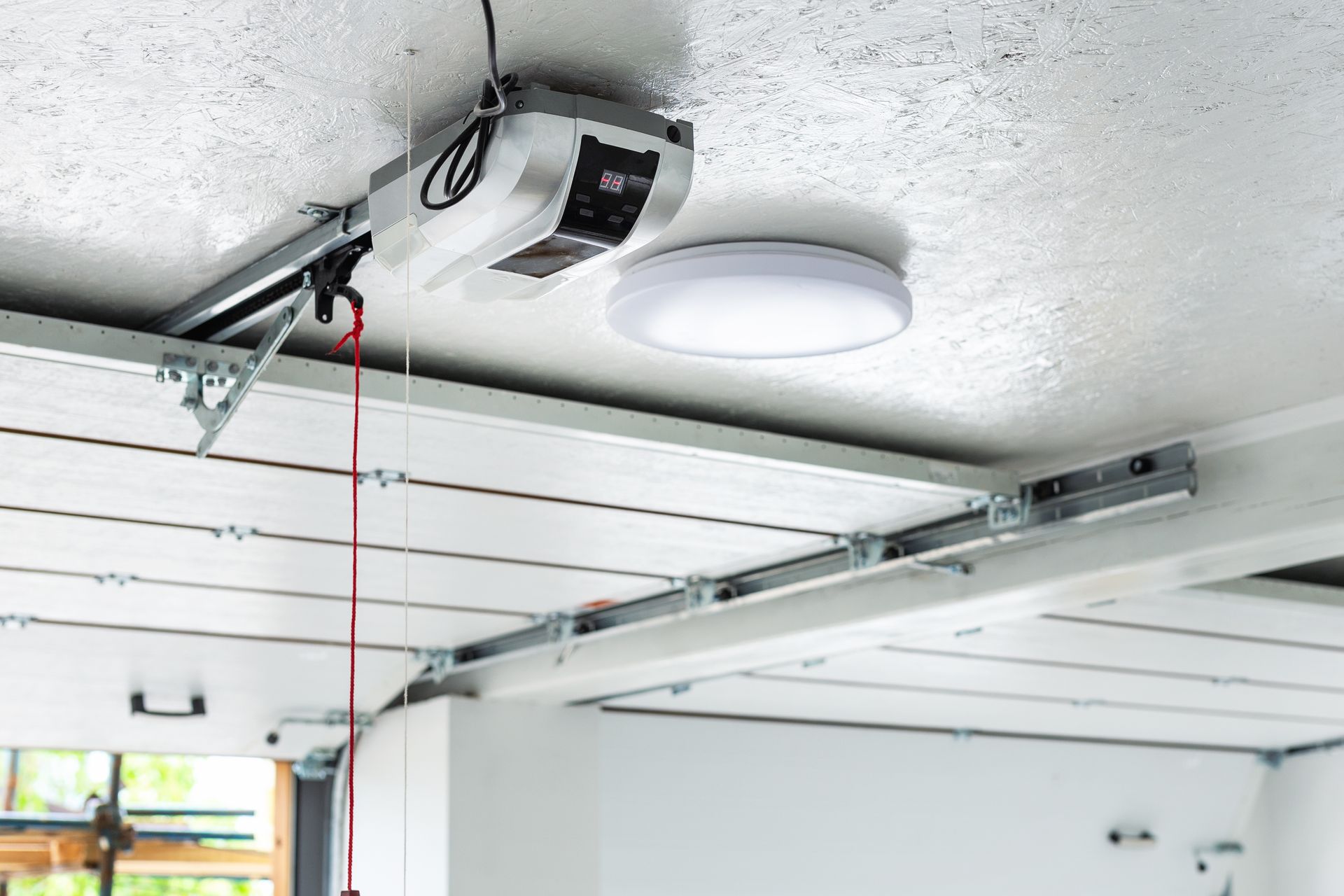
Garage door opener motors are rated for operating temperatures that most manufacturers set in the range of -4°F to 104°F. A garage that regularly exceeds 110°F is operating outside that range. Opener motors running in extreme heat experience accelerated wear on capacitors and circuit boards — which is a significant reason why Dallas-area openers fail earlier than the national average. Reducing the garage's peak summer temperature through an insulated door extends the effective service life of the opener.
This is worth considering when selecting a new opener — see our LiftMaster opener lineup for models that include improved thermal management.
Noise Reduction
Insulated garage doors are meaningfully quieter than single-layer steel, both from the outside (traffic and rain noise) and from the door's own operation. The foam core dampens the resonance that makes a steel panel door rattle and boom on a windy day or when it closes. For garages adjacent to bedrooms — a common layout in newer DFW construction — this is a practical quality-of-life difference.
Door Durability
A three-layer insulated door is structurally stiffer than a single-layer door of the same gauge steel. The foam core bonds the inner and outer skins into a composite structure that resists denting, flexing under wind pressure, and the long-term warping that occurs when a single steel skin expands and contracts through thousands of Texas temperature cycles. Hail impact still damages both types, but the triple-layer construction handles everyday stress better.
Single-Layer vs. Insulated Door — How They Compare
| Single-Layer Steel | Insulated Steel (2 or 3-layer) |
|---|---|
| No R-value — full heat transfer | R-6 to R-18 depending on construction |
| Louder operation — resonant steel panel | Quieter — foam core dampens vibration |
| Lighter — easier on springs over time | Slightly heavier — springs sized accordingly |
| Lower initial cost | Higher initial cost — often offset by energy savings |
| Dents more easily | Triple-layer more resistant to everyday denting |
| Adequate for detached utility garages | Better for attached garages and living-adjacent spaces |
When Insulation Is Probably Not Worth It
For a fully detached garage used purely as a workshop or storage space — no conditioned rooms adjacent, no bedroom above — a single-layer steel door is a perfectly adequate choice. The energy savings argument disappears when there is no conditioned space to protect. The noise and durability arguments still apply, but they may not justify the additional investment for a utility space.
Similarly, if you are replacing a door on a budget and the garage is already adequately ventilated, a mid-grade insulated door at R-9 is almost as effective as a premium R-16 door in the DFW climate. The law of diminishing returns kicks in around R-12 for most residential applications — beyond that point, the marginal benefit per dollar of R-value is small.
What to Specify When Replacing Your Door
For most attached garages in Dallas, Coppell, Murphy, and Highland Park, a two-layer steel door at R-9 or above is the practical sweet spot, meaningfully better than single-layer, meaningfully less expensive than premium triple-layer, and well-suited to the DFW climate's specific demands.
Recent Posts