Same-Day Free Estimates with 30-Minute Arrival Windows for Collin and Dallas County areas Since 1977.
How Texas Weather Affects Your Garage Door (And What to Do About It)
Texas doesn't do anything halfway and that goes for weather. DFW homeowners deal with summers that push past 100°F for weeks at a time, spring hailstorms that can dent a car hood in minutes, humidity that corrodes metal components year-round, and occasional winter cold snaps that drop temperatures into the teens overnight. Your garage door is exposed to all of it, every day of the year.
Most garage door problems in Texas are not random, they're weather driven. Understanding which conditions affect which components helps you catch problems early, maintain your door at the right times, and avoid the kind of sudden failure that leaves your car trapped or your home unsecured.
Texas Weather & Your Garage Door — Season by Season
| Season | Primary Threat | What to Check |
|---|---|---|
| Summer | Heat expansion, UV panel fade, spring tension loss, opener motor overheating | Springs, opener ventilation, panel finish |
| Spring | Severe storms, hail damage to panels, wind pressure on door seals | Panels, bottom seal, weatherstripping |
| Fall | Temperature swings accelerate spring fatigue, lubricant thickening begins | Springs, cables, lubrication, best time for annual service |
| Winter | Cold snaps cause spring contraction and brittleness; lubricant thickens and reduces effectiveness | Springs, rollers, bottom seal freeze |
Summer: Heat, Humidity, and UV Exposure
Springs and Metal Hardware
When temperatures exceed 100°F, a common occurrence in Dallas, Plano, Coppell, and Murphy during June through September, metal components expand. Torsion springs that are calibrated for a specific tension at moderate temperatures operate under different stress in extreme heat. Repeated expansion and contraction cycles across multiple summers accelerate metal fatigue significantly. This is one reason garage door springs in Texas fail earlier than the national average: a standard 10,000-cycle spring that might last 7–8 years in a moderate climate often lasts 4–6 years in DFW.
Opener Motor
Garage door openers generate heat during operation. In a garage that reaches 120°F or higher in a Texas summer, which is common in uninsulated garages with dark doors, the opener's motor thermal protection can trigger, causing it to stop mid-cycle and refuse to operate until it cools down. If your opener randomly stops working during afternoon heat and recovers an hour later, this is almost certainly the cause. An insulated door and adequate garage ventilation both help.
Panel Finish and Sealants
UV exposure fades paint finishes and degrades rubber weatherstripping faster in Texas than in most other climates. The bottom seal, the rubber strip along the bottom of the door, becomes brittle and cracks in extreme heat, allowing insects, dust, and water to enter. Inspect the bottom seal annually and replace it when cracking is visible. A degraded seal also reduces energy efficiency and lets conditioned air escape from attached garages.
Spring Storms: Hail, Wind, and Pressure
Hail Damage
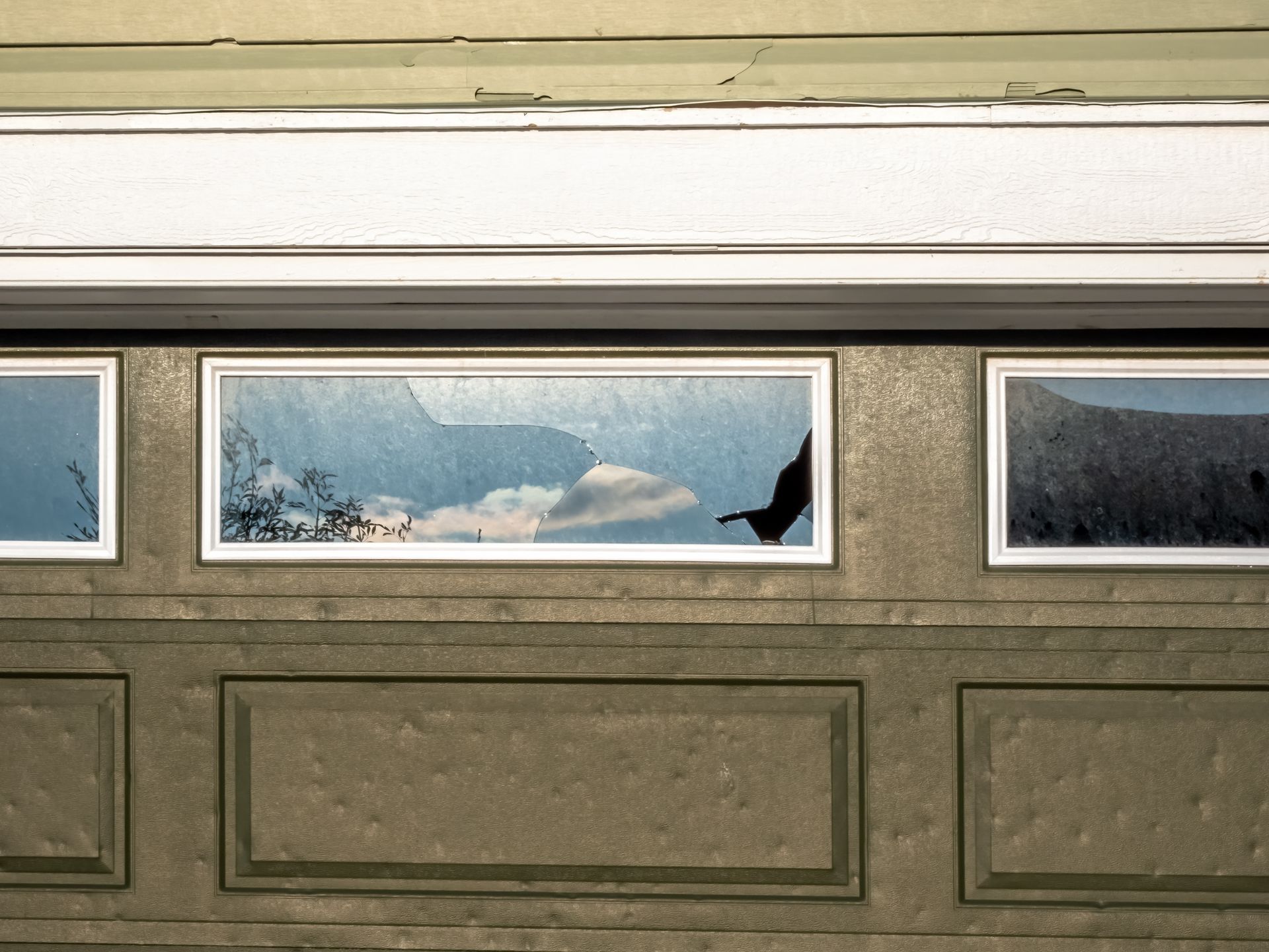
North Texas is in the heart of hail alley, and garage doors take a direct hit during severe spring storms. Hail damage ranges from cosmetic dents on steel panels to structural damage that affects the door's ability to seal and operate correctly. A single large hailstone can dent a standard 24-gauge steel panel deeply enough that the panel section cannot be raised without binding in the track. After any significant hail event, inspect your door panels carefully before operating it, damaged panels can catch and cause the door to come off its tracks.
Wind Pressure
Severe thunderstorms across the DFW area regularly produce wind gusts of 60 mph or higher. Standard residential garage doors are not wind-rated for these conditions. A door that is slightly misaligned, has worn rollers, or has a weakened bottom section is more vulnerable to being pushed inward by wind pressure. If your door rattles excessively or flexes visibly during storms, it may be worth having the roller and track alignment checked.
Fall and Winter: Cold Snaps and Temperature Swings
Spring Brittleness in Cold Weather
Texas winters are mild by national standards, but the occasional hard freeze creates a specific problem for garage door springs. When temperatures drop rapidly from 60°F to 20°F overnight, as they did across DFW during winter storms in recent years, metal contracts sharply. Springs that are already worn from summer stress are particularly vulnerable to snapping during these cold events. The combination of summer heat fatigue and sudden winter contraction is why spring failures spike in DFW immediately after cold snaps.
Fall is the best time of year to have your springs inspected and lubricated before winter arrives. If your springs are more than five years old, asking a technician about proactive replacement during a service visit is worth the conversation. See our page on garage door spring replacement for more detail on what replacement involves and what to expect.
Lubricant Thickening
Standard garage door lubricants thicken in cold temperatures, increasing friction on rollers, hinges, and the opener drive. A door that operates quietly in summer may grind, squeak, or move sluggishly on the first cold morning of the year. Use a silicone-based spray lubricant rather than WD-40, which evaporates quickly and leaves residue. Apply it to all metal-on-metal contact points, rollers, hinges, the torsion spring, and the opener rail, at the beginning of fall.
Year-Round Texas Garage Door Maintenance Checklist
Do these once a year — fall is the best time:
• Inspect torsion springs for gaps, rust, and visible wear
• Lubricate rollers, hinges, springs, and opener rail with silicone spray
• Inspect the bottom seal, replace if cracked or flattened
• Check weatherstripping on sides and top for gaps or deterioration
• Test auto-reverse safety sensors, place a 2x4 flat on the ground under the door and close it; the door should reverse on contact
• After hail: inspect all panels for dents before operating
• Before summer: check opener ventilation and confirm springs are lubricated
Garage Door Service Across the DFW Metroplex
Plano Overhead Garage Door has been servicing garage doors across DFW since 1977, through Texas summers, hailstorms, and winter cold snaps. If your door is showing signs of weather wear, same-day service is available throughout the area. Visit our
Dallas garage door repair and service page or call
(972) 422-1695 to schedule a free estimate. We serve homeowners in Dallas, Plano, Murphy, Coppell, Highland Park, and all surrounding DFW communities.
Recent Posts